 Indian wedding portraits are all about emotion, elegance, and cultural richness. Whether it is a bride in a silk saree, a groom in sherwani, or a couple in traditional attire, the goal is to create a cinematic, flattering, and timeless portrait.
This setup is designed for wedding photographers in India who want a clean studio-style look using minimal equipment.
The Concept
The aim is to create a soft, cinematic portrait with controlled shadows that enhances:
- Bridal makeup and jewellery
- Groom’s attire and structure
- Emotional expression
- Skin tone accuracy
- Premium studio feel
This works perfectly for:
- Bridal portraits
- Couple portraits
- Reception stage portraits
- Pre-wedding studio shoots
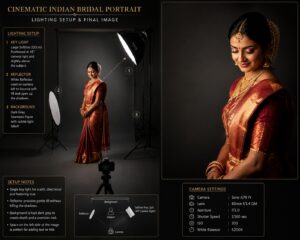
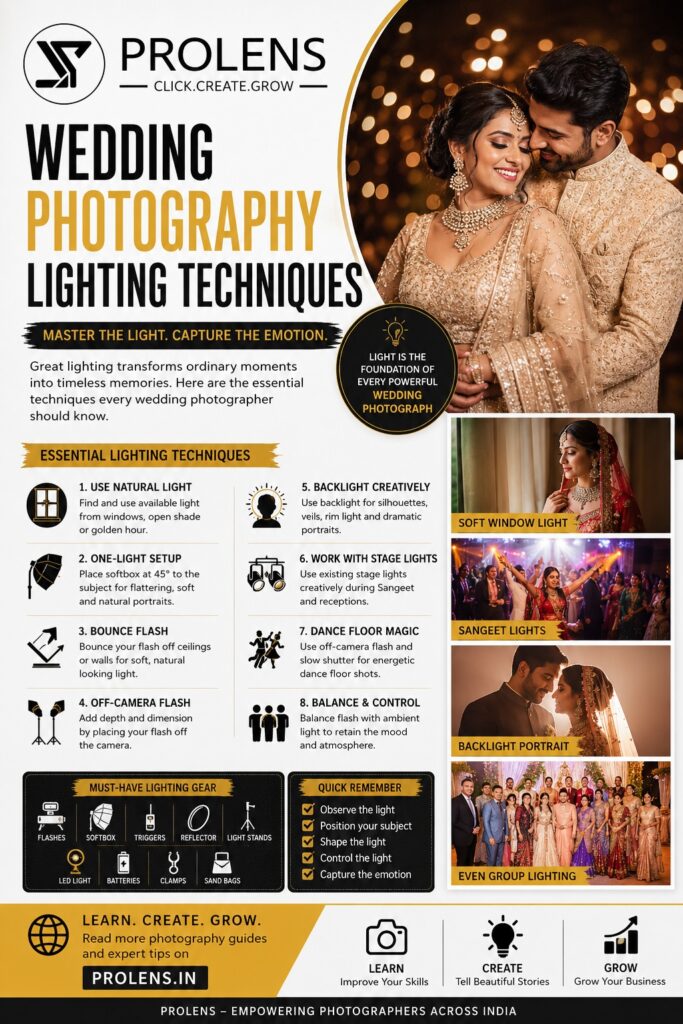
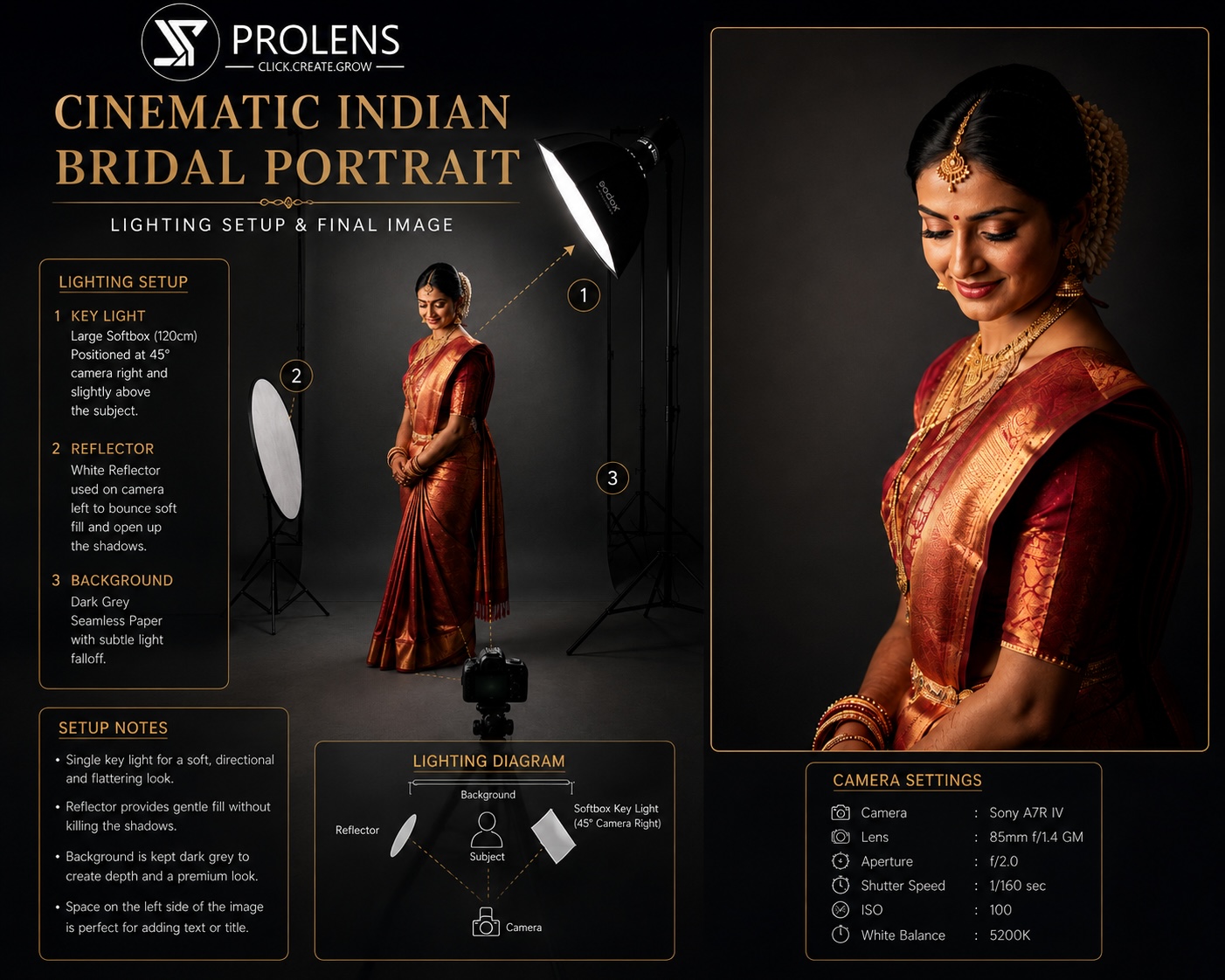
Lighting Setup (Simple One-Light System)
Key Light
Use a large softbox (90–120cm).
- Position: 45° to camera-right
- Height: Slightly above eye level
- Direction: Feather across the face (not direct)
Why this works for Indian weddings:
- Softens heavy bridal makeup
- Enhances jewellery highlights
- Flattering for all Indian skin tones
- Creates depth in sarees, lehengas, sherwanis
Fill Light (Optional)
Use a white reflector on camera-left.
- Only to lift shadows
- Do NOT overfill
- Keep contrast for drama
Background
Use:
- Dark grey
- Black
- Neutral textured backdrop
Let the key light spill slightly for a soft gradient effect.
This gives a premium studio look without extra lights.
Camera Setup
- Lens: 85mm or 70–200mm (85–135mm range ideal)
- ISO: 100–200
- Shutter: 1/160 or flash sync speed
- Aperture: f/5.6–f/8 (important for jewellery + face sharpness)
- White Balance: 5500–6000K
Pose Direction (Very Important)
Avoid stiff posing.
Instead guide the couple:
Bride:
- Slight chin lift
- Look towards light
- Hold dupatta or jewellery naturally
- Relax shoulders
Groom:
- Strong posture
- Slight turn of body
- Hands in natural position (watch, cuff, sherwani details)
Couple:
- One looking at camera, one looking at partner
- Or both looking away for candid feel
Composition Tips
Always shoot for wedding deliverables:
- Vertical (Instagram + albums)
- Horizontal (stage banners + prints)
- Tight portraits (emotion)
- Medium frames (outfit + pose)
Leave negative space for album design and text.
Common Problems & Fixes
Flat lighting
→ Move light more to the side and feather it
Harsh shadows on face
→ Bring softbox closer or increase size
Jewellery not visible
→ Slightly adjust angle of light for highlights
Skin looks too shiny
→ Reduce power or adjust angle, not post-processing
Background too dark
→ Allow light spill or move subject slightly forward
Post-Production Style
Keep it natural and premium:
- Slight warm tone (Indian wedding feel)
- Controlled contrast
- Natural skin tones (avoid orange overload)
- Enhance jewellery highlights subtly
- Clean background distractions
- Soft cinematic finish
Optional Upgrades
Once comfortable, you can add:
- Rim Light
- Behind subject for separation
- Great for bridal lehengas and veils
- Hard Light Variation
- For dramatic groom portraits or fashion-style bridal shots
- Colored Backgrounds
- Gold, maroon, or warm tones for Indian wedding aesthetics
Where This Setup Works in India
- Bridal studio portraits
- Wedding album cover images
- Reception stage photography
- Pre-wedding indoor shoots
- Luxury wedding branding
- Designer album layouts
Key Takeaway
You don’t need complex lighting for premium Indian wedding portraits.
A single large softbox + reflector + good posing direction is enough to create:
Cinematic, emotional, and high-end wedding portraits that work across albums, Instagram, and large prints.