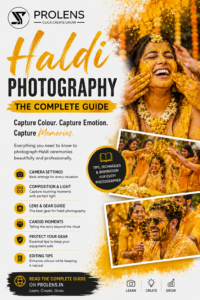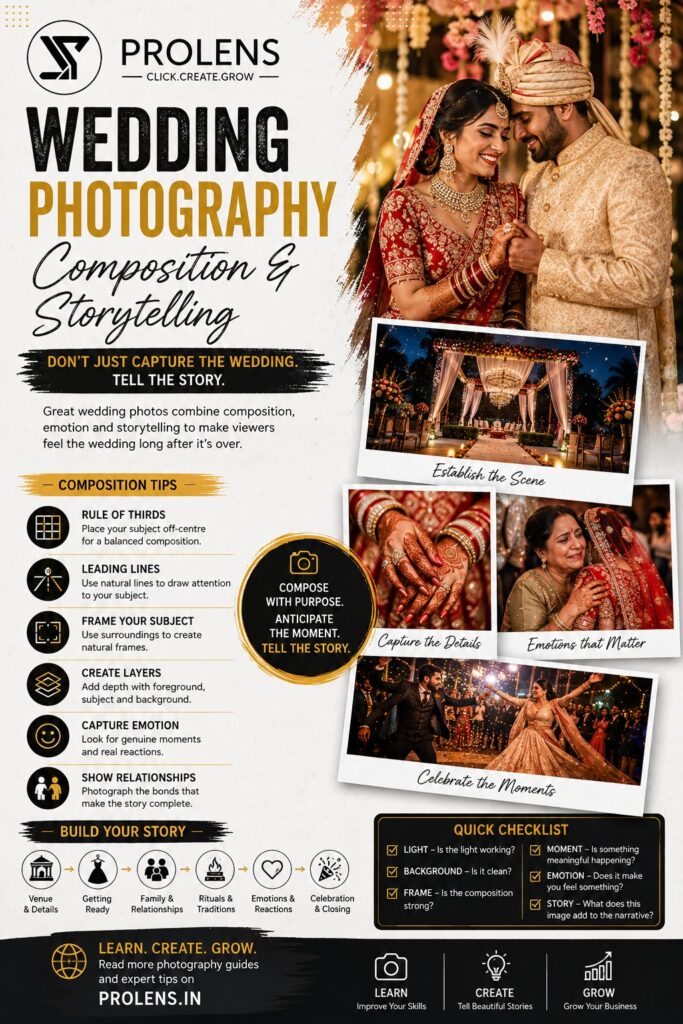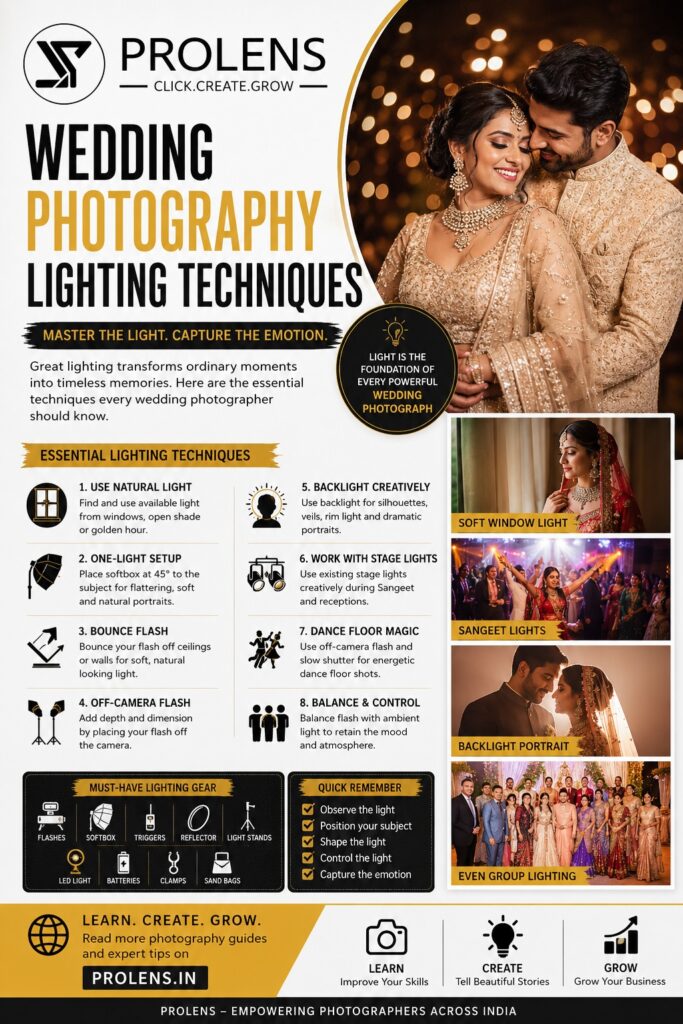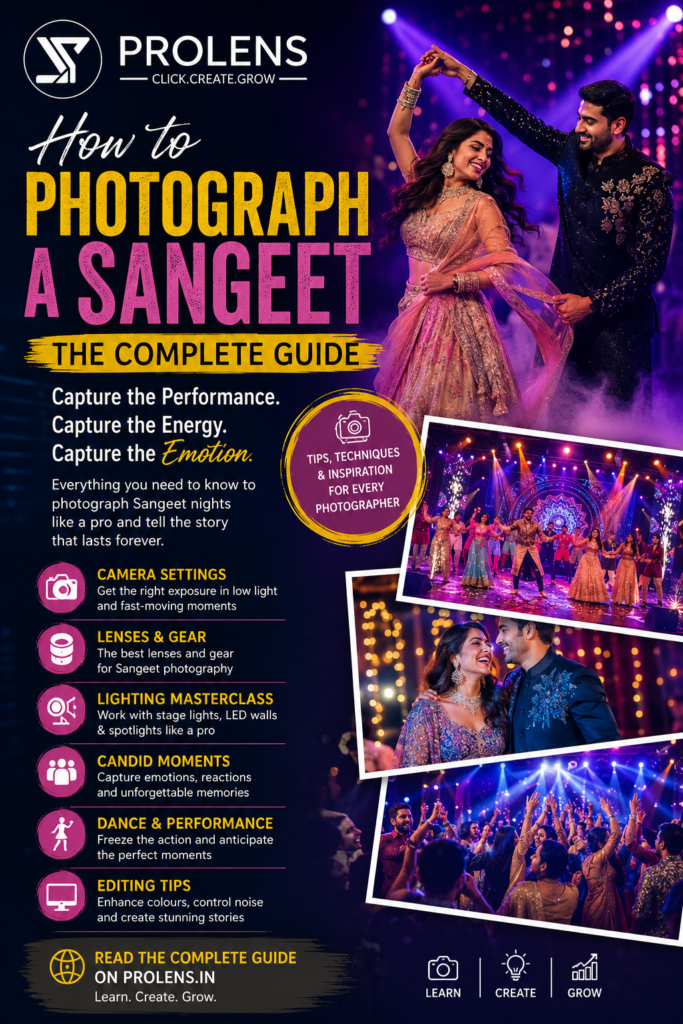
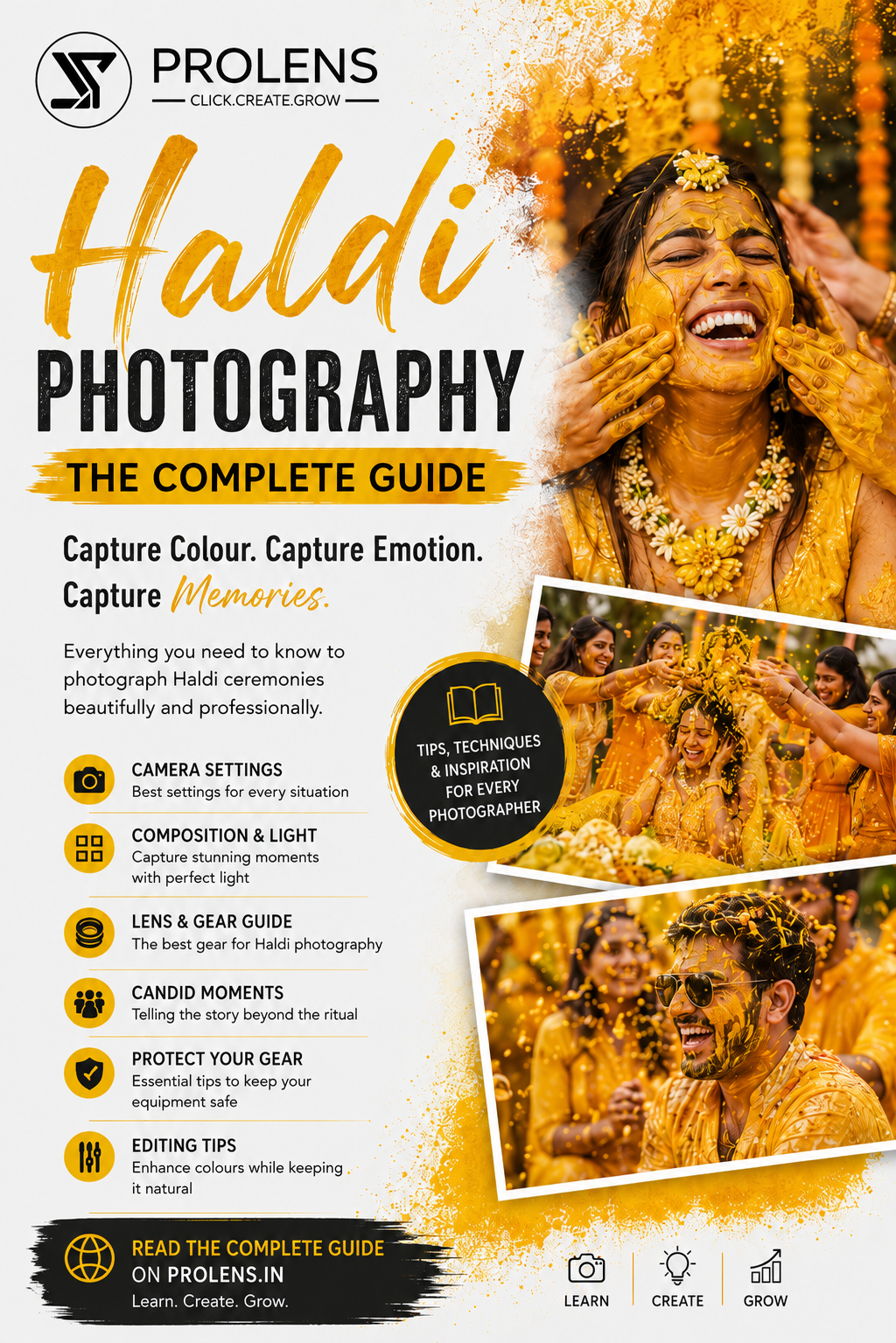
Haldi Photography: The Complete Guide for Indian Wedding Photographers
Capture Colour. Capture Emotion. Capture Memories.
The Haldi ceremony is one of the most colourful, emotional and energetic events in an Indian wedding. Vibrant yellows, floral décor, spontaneous laughter, playful moments and close family interactions make it a visual treat for photographers.
But photographing Haldi isn’t as easy as the photographs make it look. Events can move quickly, lighting conditions change constantly, turmeric can damage expensive equipment, and some of the best expressions last for only a fraction of a second.
This complete guide from PROLENS – Click. Create. Grow. covers camera settings, lenses, lighting, composition, candid photography, equipment protection and editing techniques to help wedding photographers capture Haldi ceremonies beautifully and professionally.
1. Understand the Haldi Ceremony Before You Start Shooting
Every Haldi ceremony is different.
In some families, it is a relatively intimate ritual involving parents and close relatives. In others, it becomes a full-scale celebration involving flowers, water, music, dancing and generous quantities of Haldi.
Before the event begins, speak to the couple or wedding planner and understand the sequence of events.
Find out:
- Where the bride or groom will be seated
- Who will apply Haldi first
- Whether there will be separate bride and groom ceremonies
- Whether flower showers are planned
- Whether water will be used
- Whether there are surprise activities
- Where important family members will be positioned
Knowing what is going to happen gives you a major advantage.
Great wedding photography isn’t only about reacting quickly. It is also about anticipating the moment before it happens.
2. Best Camera Settings for Haldi Photography
There is no single perfect camera setting for every Haldi ceremony. Your settings should respond to the available light and the amount of movement in the scene.
For fast-moving moments, consider starting around:
Shutter Speed: 1/500 sec or faster
Aperture: f/2.8–f/4
ISO: Auto ISO or approximately ISO 200–1600 depending on available light
Autofocus: Continuous AF / Servo AF
Drive Mode: High-speed continuous shooting
File Format: RAW or RAW + JPEG
When photographing energetic moments such as flower showers, dancing or friends applying Haldi, shutter speed becomes particularly important.
If your shutter speed is too slow, expressions may be sharp but moving hands, flowers and turmeric may blur.
For quieter portraits, you can reduce the shutter speed and use a wider aperture to create a softer background.
Watch Your Highlights
Yellow clothing, bright décor and strong sunlight can create difficult exposure conditions.
Regularly check your histogram and highlight warnings. Slightly protecting the highlights generally gives you more flexibility during post-production than recovering severely overexposed areas.
3. The Best Lenses for Haldi Photography
A Haldi ceremony requires photographers to switch rapidly between environmental photographs, portraits and close emotional moments.
24–70mm f/2.8 – The Workhorse
For many wedding photographers, this will be the most versatile lens of the ceremony.
Use it for:
- Family interactions
- Medium portraits
- Couple photographs
- Rituals
- Dancing
- Group photographs
- General documentary coverage
70–200mm f/2.8 – Capture Emotion From a Distance
This lens is excellent when you want intimate expressions without entering someone’s personal space.
It is particularly useful for:
- Parents’ reactions
- Emotional expressions
- Close portraits
- Candid photographs
- Compressing colourful backgrounds
35mm Prime – Environmental Storytelling
A 35mm lens provides enough width to show the atmosphere without creating excessive distortion.
Use it to photograph the bride or groom surrounded by family, décor and celebrations.
50mm or 85mm Prime – Beautiful Portraits
When you have a few minutes for portraits, a fast prime lens can produce elegant photographs with strong subject separation and creamy backgrounds.
4. Composition: Use the Colour to Your Advantage
Haldi ceremonies naturally provide photographers with a powerful colour palette.
Yellow outfits, turmeric, marigolds, colourful flowers and traditional décor can all become compositional elements.
Don’t simply photograph the person.
Photograph the environment around the person.
Look for:
- Marigold strings as foreground elements
- Doorways and arches for natural framing
- Flowers surrounding the subject
- Symmetrical décor
- Family members framing the bride or groom
- Reflections
- Layers of people
- Hands entering the frame
These elements create visual depth and make photographs feel more immersive.
5. Capture the Establishing Shots
Before guests arrive and the ceremony becomes crowded, photograph the venue.
Capture:
- Overall décor
- Haldi setup
- Floral arrangements
- Seating area
- Name boards and signage
- Turmeric bowls
- Jewellery
- Clothing details
- Wedding stationery
- Decorative elements
These photographs may not seem as exciting as the action photographs, but they are extremely valuable when creating wedding albums.
They establish where the story happened.
6. Photograph the Details
Some of the most memorable Haldi photographs are surprisingly small.
Look for:
- Turmeric-covered hands
- Floral jewellery
- Bangles
- Anklets
- Mehendi
- Haldi bowls
- Flower petals
- Yellow clothing
- Decorative accessories
- Expressions reflected in mirrors
Mix wide photographs, medium compositions and tight details.
This gives the final wedding gallery visual variety.
7. Candid Moments Are the Heart of Haldi Photography
The best Haldi photographs often happen between the official rituals.
Watch what is happening around the bride or groom.
A mother may suddenly become emotional.
A sibling may prepare to throw flowers.
Friends may exchange a mischievous glance before covering the groom in Haldi.
A grandparent may quietly watch the celebration.
These moments cannot easily be recreated.
Keep scanning the environment rather than concentrating entirely on the central subject.
A professional wedding photographer should constantly ask:
Where is the next moment likely to happen?
8. Photograph Reactions, Not Just Actions
When someone applies Haldi to the bride, the obvious photograph is the application itself.
But immediately afterwards, look elsewhere.
How did the bride react?
What did her mother do?
Are the bridesmaids laughing?
Is the groom trying to escape?
Often the reaction tells a stronger story than the action.
A useful technique is to photograph in short sequences:
Action → Reaction → Interaction
That sequence can later become an excellent wedding album spread.
9. Use Burst Mode Carefully
Haldi ceremonies contain several unpredictable moments.
Burst shooting can be extremely useful when photographing:
- Flower showers
- Haldi throwing
- Water splashes
- Dancing
- Group celebrations
- Jumping
- Confetti
- Spontaneous laughter
But don’t hold the shutter continuously throughout the event.
Anticipate the peak moment and shoot controlled bursts.
This reduces unnecessary files and makes the selection process considerably easier.
10. Lighting a Haldi Ceremony
Natural daylight is often ideal for Haldi photography because it enhances skin tones and makes yellow colours appear vibrant.
Whenever possible, look for soft directional light.
If the ceremony is outdoors during harsh midday sunlight, direct sunlight can produce deep eye shadows and extreme highlights.
Look for:
- Open shade
- Covered areas
- Diffused sunlight
- Side lighting
- Backlighting
When necessary, use fill flash carefully to balance harsh shadows.
For indoor ceremonies, bouncing flash from a neutral ceiling or wall can create much softer results than direct on-camera flash.
The objective should be simple:
Keep the photographs bright and colourful without making the lighting look artificial.
11. Backlight the Flowers
One of the most effective techniques during a flower shower is positioning yourself so that light comes from behind or slightly behind the subject.
Backlighting can illuminate individual flower petals and create separation between the subject and background.
Use a fast shutter speed to freeze petals in the air.
Take several frames through the sequence because facial expressions can change dramatically within fractions of a second.
12. Get Low. Get High. Change Your Perspective.
Photographers often spend an entire ceremony photographing from standing eye level.
That creates repetitive images.
Change your perspective.
Try photographing:
- From ground level
- Through flowers
- Over someone’s shoulder
- From behind the family
- From an elevated position
- Through décor
- Through reflective surfaces
Even moving a few metres can completely change the photograph.
13. Don’t Forget the Family
Wedding photography is not only about the bride and groom.
Parents, siblings and grandparents form an essential part of the story.
Make sure you deliberately photograph:
- Bride with parents
- Groom with parents
- Siblings together
- Grandparents
- Bridesmaids
- Groomsmen
- Close friends
- Extended family
These photographs often become some of the most treasured images from the wedding.
14. Create a Few Strong Portraits Before the Chaos Begins
Once Haldi starts, clothing, hair and makeup can change very quickly.
Take five or ten minutes before the ceremony for clean portraits.
Capture:
- Full-length portrait
- Half-length portrait
- Close-up
- Floral jewellery
- Outfit details
- Side profile
- Environmental portrait
- Portrait with parents
These photographs provide a visual contrast to the energetic images that follow.
15. Protect Your Camera Gear
Haldi photography can be extremely demanding on equipment.
Turmeric powder, paste and water can enter camera buttons, lens rings and electronic components.
Take equipment protection seriously.
Recommended precautions:
- Use rain covers where practical
- Keep lens changes to a minimum
- Carry microfiber cloths
- Carry lens cleaning supplies
- Keep spare equipment inside a closed camera bag
- Use lens hoods
- Keep bags away from the main celebration area
- Avoid placing cameras directly on the floor
- Carry protective covers for flashes and accessories
If water throwing is expected, prepare before it begins.
Don’t wait until people start throwing water to protect your equipment.
16. Work With Two Camera Bodies
For professional Haldi coverage, two camera bodies can be extremely useful.
A practical combination is:
Camera 1: 24–70mm
Camera 2: 70–200mm or a fast prime
This dramatically reduces lens changes and allows you to move instantly between environmental and close-up photographs.
It also provides redundancy if one camera develops a problem.
17. Coordinate With Your Photography and Video Team
Indian weddings increasingly involve multiple photographers, cinematographers, drone operators and content creators.
Without coordination, everyone can end up appearing in everyone else’s frames.
Before the ceremony starts, quickly discuss:
- Primary shooting positions
- Lighting placement
- Important rituals
- Couple portraits
- Family photographs
- Drone usage, where applicable
- Planned flower or water sequences
A coordinated team produces better photographs and a better experience for the client.
18. Editing Haldi Photographs
Haldi photographs should look colourful and energetic, but excessive editing can quickly make them unnatural.
The biggest challenge is usually yellow.
Because the environment contains so much yellow and orange, skin tones can easily become excessively warm.
During editing, pay attention to:
White Balance
Correct strong yellow or green colour casts while preserving the warmth of the ceremony.
Skin Tones
Skin should remain believable even when surrounded by yellow décor.
Highlights
Recover details from bright clothing and sunlit areas where possible.
Contrast
Use enough contrast to create depth without losing shadow detail.
Colour
Enhance yellows and oranges selectively rather than increasing global saturation aggressively.
Consistency
A wedding gallery should feel like one coherent story.
Create a consistent colour treatment across the complete Haldi sequence.
19. Build a Story, Not Just a Collection of Photographs
A professional wedding photographer should think like a visual storyteller.
A complete Haldi gallery could follow this sequence:
Venue → Details → Portraits → Family → Ritual → Emotion → Celebration → Chaos → Closing Moments
This structure helps transform hundreds of individual photographs into a meaningful visual narrative.
When designing the wedding album, combine wide photographs, medium shots and close-up details to maintain rhythm.
20. Essential Haldi Photography Shot List
Before leaving the ceremony, make sure you have covered:
- Venue and décor
- Haldi setup
- Bride/groom portrait before the ceremony
- Outfit details
- Floral jewellery
- Parents
- Siblings
- Grandparents
- Haldi application
- Close-ups of hands
- Emotional reactions
- Friends and family laughing
- Flower showers
- Dancing
- Wide celebration photographs
- Tight candid expressions
- Group photographs
- Creative portraits
- Closing moments
Final Thoughts
Haldi photography combines nearly everything that makes Indian wedding photography exciting: colour, culture, movement, emotion and unpredictability.
Technical knowledge certainly matters. You need the right shutter speed, autofocus settings, lenses and lighting techniques.
But the photographers who consistently create memorable Haldi photographs develop another skill:
anticipation.
Watch people’s expressions. Understand relationships. Predict what is about to happen. Position yourself before the moment unfolds.
Because at a Haldi ceremony, the difference between an ordinary photograph and an unforgettable one can be less than a second.
Capture the colour. Capture the emotion. Capture the memories.
About PROLENS
PROLENS – Click. Create. Grow.
PROLENS is a photography platform focused on supporting, educating and empowering photographers across India through practical learning, professional insights, workshops and industry engagement.
Explore more photography guides, techniques and professional resources at PROLENS.IN.