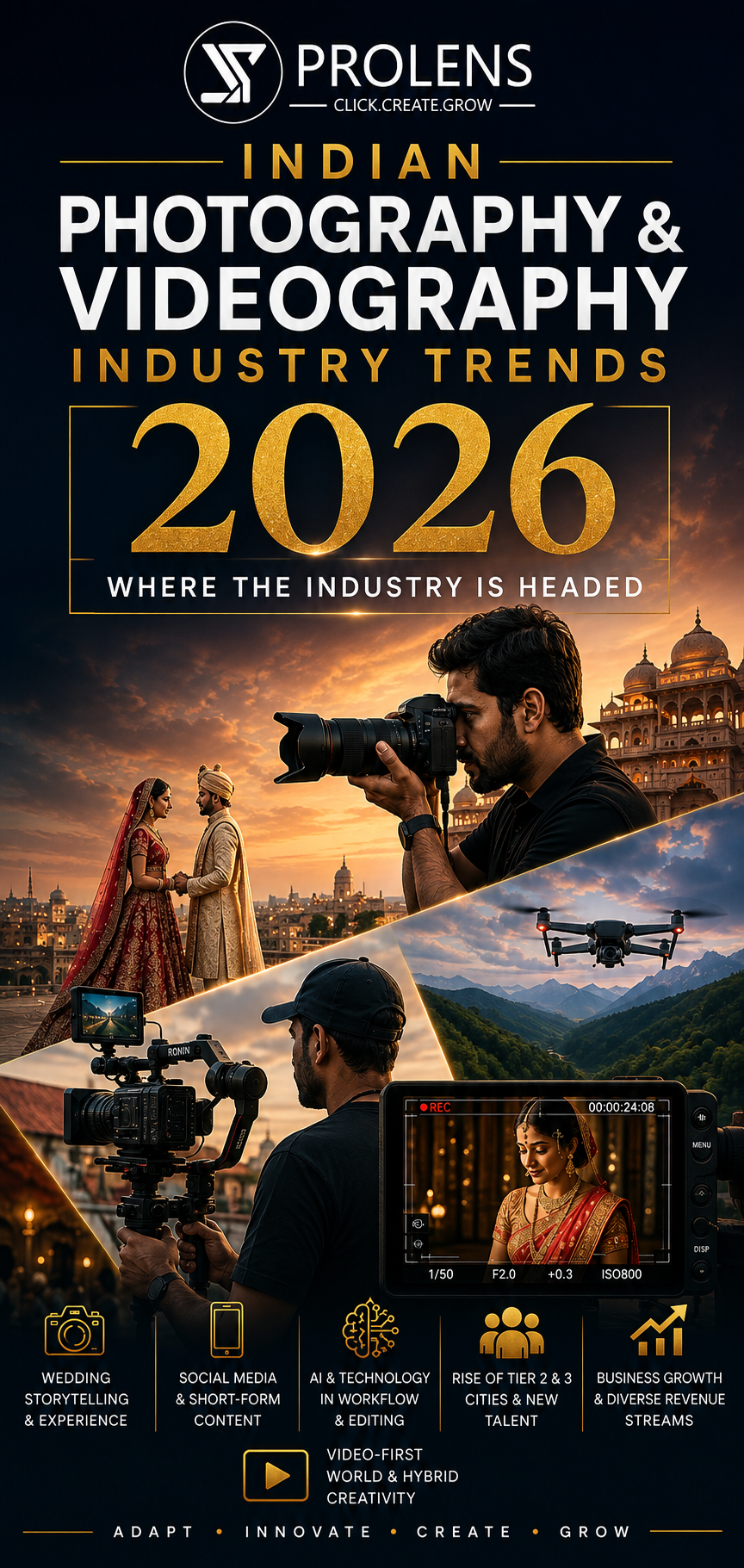
India’s photography and videography industry is undergoing a significant transformation.
The business is no longer driven purely by cameras, lenses and technical expertise. Today, professional photographers and filmmakers are increasingly expected to be visual storytellers, content creators, editors, personal brands and business owners.
From large-scale destination weddings to Instagram Reels, AI-assisted editing, documentary-style wedding films and the growing demand for same-day content, the Indian visual-content ecosystem is expanding rapidly.
For photographers and videographers, the opportunity is enormous—but so is the need to adapt.
India’s wedding economy alone continues to generate substantial demand for professional visual services. WedMeGood’s 2024–25 report estimated an average wedding budget of ₹36.5 lakh and an average destination-wedding budget of ₹51.1 lakh, while more than 40% of couples reported using a combination of offline recommendations, wedding platforms and social media when choosing vendors.
At the same time, India’s wider creator economy is creating a new market for photography and video professionals. A 2025 BCG report estimated 2–2.5 million monetised content creators in India and projected creator-influenced consumer spending to exceed $1 trillion by 2030.
So, what are the major trends shaping the industry?
1. Wedding Photography Is Moving From “Coverage” to “Storytelling”
The traditional expectation was straightforward:
Cover the wedding. Deliver the photographs. Produce a wedding film.
That model is changing.
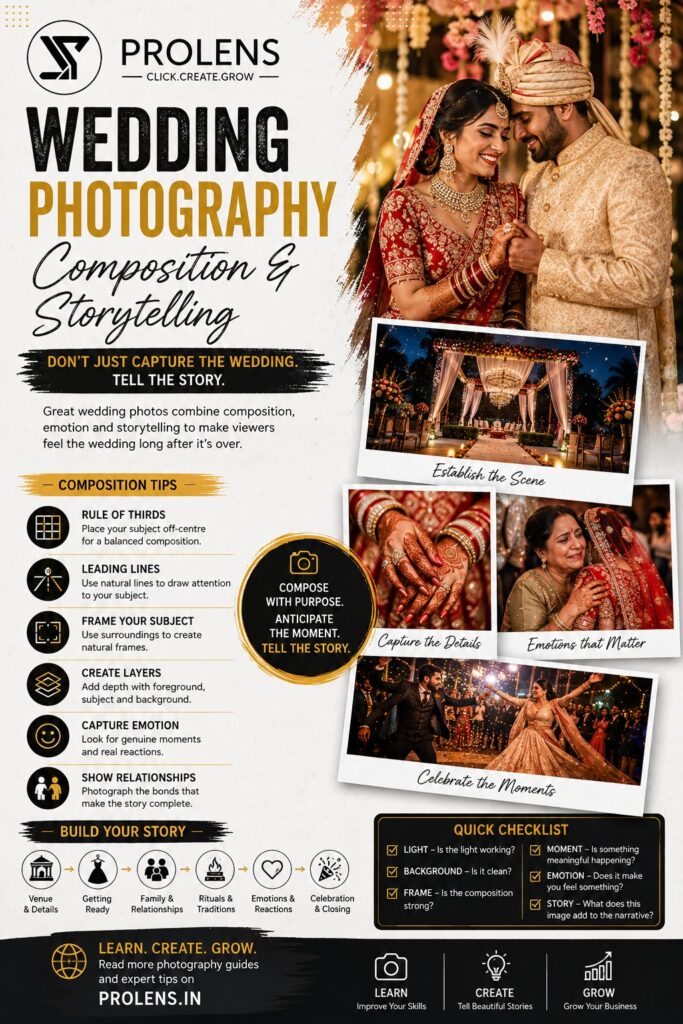
Today’s couples increasingly want their wedding documented as a visual story rather than simply recorded as a sequence of events.
This means photographers are concentrating more on:
- Genuine emotions
- Family interactions
- Unscripted moments
- Cultural details
- Personal stories
- Bridal and groom portraits
- Venue architecture
- Food and décor
- Behind-the-scenes moments
- Audio-driven storytelling
Documentary and natural aesthetics are gaining attention as couples move away from overly staged and heavily processed imagery. Industry commentary in 2026 points towards natural colour, authentic moments and ambient sound becoming increasingly important in wedding films.
The opportunity for photographers
The photographer who can tell a compelling story will increasingly differentiate themselves from photographers competing primarily on price.
2. The Rise of Instagram-First Wedding Content
One of the biggest changes in Indian wedding photography is the growing importance of speed.
Couples don’t necessarily want to wait weeks to see their first wedding memories.
They want content they can share immediately.
This has created demand for:
- Same-day edits
- Instagram Reels
- Vertical wedding videos
- Short-form highlight films
- BTS content
- Teaser videos
- Couple portraits for social media
- Venue and décor Reels
- Bridal preparation content
- Wedding-day Stories
Recent reporting on India’s wedding market highlights the shift towards Instagram-focused photography and faster social-media-ready content.
The new expectation
A wedding photography team may now be expected to deliver:
Photography + Cinematic Film + Reels + Same-Day Content + Social Media Assets
This creates both an opportunity and a challenge.
Photographers need to build teams capable of producing multiple formats simultaneously.
3. Vertical Video Is No Longer Optional
For many clients, the smartphone is the primary screen on which their wedding memories will first be consumed.
That means the traditional 16:9 video is no longer the only important format.
Professional teams increasingly need to think in:
9:16 + 16:9 + 1:1
A single wedding can generate content for:
- Instagram Reels
- YouTube
- YouTube Shorts
- Digital invitations
- LED screens
- Wedding websites
This is changing the way cinematographers shoot.
Instead of thinking only about a final cinematic film, professionals need to capture multiple deliverables from the same event.
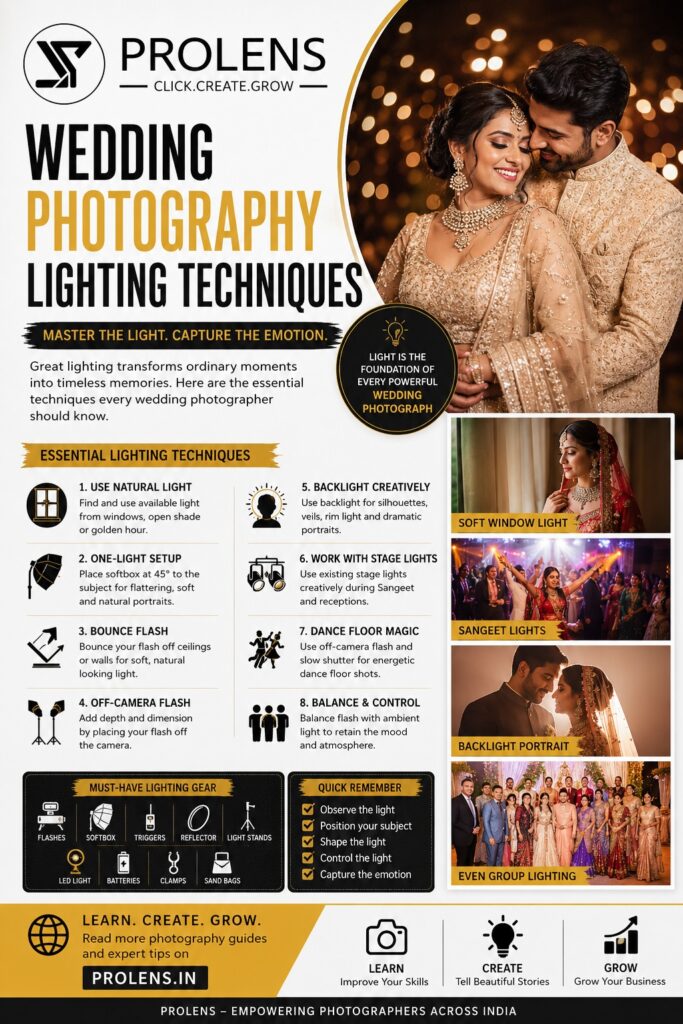
4. AI Is Becoming Part of the Photography Workflow
Artificial Intelligence is one of the most important technological developments affecting the industry.
AI is increasingly being used to assist with:
- Photo culling
- Image selection
- Exposure correction
- Noise reduction
- Masking
- Retouching
- Skin corrections
- Background removal
- Video transcription
- Caption generation
- Subtitle creation
- Audio cleanup
- Editing assistance
- Search and organisation
- Content repurposing
The important point is that AI is increasingly becoming a workflow tool rather than simply an image-generation tool.
For a wedding photographer dealing with thousands of photographs, saving several hours in culling and initial editing can have a direct impact on profitability.
But AI will not replace visual judgement
The strongest professionals will use AI to eliminate repetitive tasks while retaining human control over:
Story + Emotion + Composition + Colour + Creative Direction
The competitive advantage will therefore come from knowing where to use AI and where not to use it.
5. Natural Skin Tones Are Making a Comeback
The heavily stylised orange-and-teal cinematic look that dominated wedding films for years is gradually losing its exclusivity.
Indian photographers are increasingly exploring:
- Natural skin tones
- Softer contrast
- Film-inspired colours
- Natural greens
- Controlled highlights
- Subtle grain
- Authentic ambient light
This is particularly important in Indian weddings because skin tones, colourful clothing, jewellery and décor can quickly become unnatural when colour grading is excessive.
The future is not necessarily “less cinematic.”
It is more believable cinematic storytelling.
6. Destination Weddings Are Creating New Opportunities
Destination weddings are becoming increasingly important for the Indian wedding ecosystem.
Rajasthan, Goa, Kerala, Uttarakhand, Himachal Pradesh and other destinations are attracting couples looking for experiences beyond conventional hometown celebrations.
A 2025 Grand View Research report estimated India’s destination wedding market at $16.25 billion in 2024 and projected it to reach $55.39 billion by 2033.
For photographers, destination weddings can create opportunities for:
- Multi-day assignments
- Pre-wedding shoots
- Welcome-event coverage
- Haldi and Mehendi stories
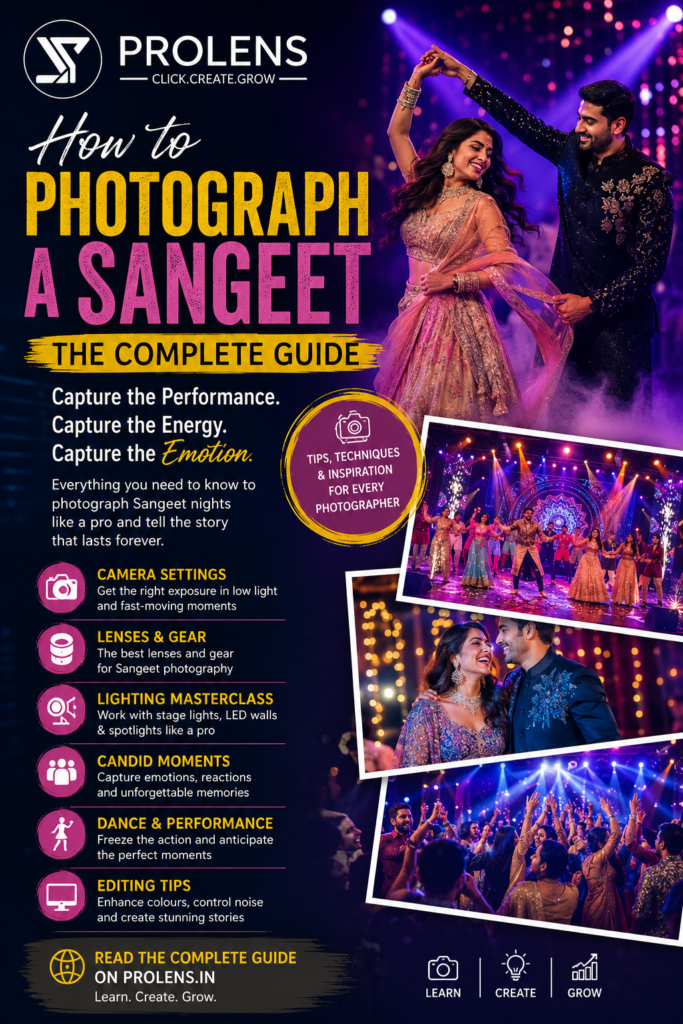
- Sangeet films
- Wedding-day photography
- Couple portraits
- Drone coverage
- Same-day edits
- Social-media content
Destination photography is becoming an experience business
Photographers are no longer simply travelling with a camera.
They are becoming part of the destination wedding production ecosystem.
7. Regional India Is Becoming a Major Opportunity
The photography industry is no longer concentrated only in Mumbai, Delhi, Bengaluru, Hyderabad and Chennai.
Tier 2 and Tier 3 cities are developing strong photography communities and increasingly sophisticated wedding markets.
Cities across:
- Tamil Nadu
- Karnataka
- Kerala
- Andhra Pradesh
- Telangana
- Maharashtra
- Gujarat
- Rajasthan
- Punjab
- West Bengal
- Odisha
- Northeast India
are producing photographers with increasingly distinctive visual styles.
This is particularly important because India’s wedding market is extremely diverse.
A photographer who understands regional traditions, rituals, languages and cultural aesthetics can create a strong competitive advantage.
The next generation of photography talent will increasingly emerge beyond India’s metros.
This makes workshops, communities, hands-on training and regional industry networking more important than ever.
8. Photography Education Is Becoming More Practical
Photographers today have access to an enormous amount of information online.
But information is not the same as experience.
There is increasing demand for:
- Hands-on workshops
- Live shoots
- Lighting demonstrations
- Wedding simulations
- Business workshops
- Editing masterclasses
- Cinematography training
- AI workflow training
- Portfolio reviews
- Industry networking
For emerging photographers, the most valuable learning often happens when theory is combined with real shooting situations.
This is especially important in Tier 2 and Tier 3 cities, where access to experienced professionals and specialised workshops can be limited.
9. Camera Technology Is Becoming More Video-Centric
The distinction between a “photography camera” and a “video camera” continues to blur.
Modern mirrorless systems increasingly serve both photographers and filmmakers.
Professionals are evaluating cameras based on:
- Autofocus
- Dynamic range
- Low-light performance
- Image stabilisation
- 4K/6K/8K video capabilities
- Rolling shutter
- Codec options
- Heat management
- Battery performance
- Dual-card recording
- Lens ecosystem
Camera manufacturers continue to compete heavily in the interchangeable-lens market; Canon, for example, reported that its interchangeable-lens digital cameras maintained the company’s No. 1 global share for 22 consecutive years through 2024.
But the camera body is only one part of the equation.
Lens selection, lighting, audio and the photographer’s skill remain critical.
10. Hybrid Photo + Video Teams Are Becoming More Valuable
Clients increasingly prefer dealing with a single professional team capable of managing multiple visual requirements.
A modern wedding production team may include:
- Lead photographer
- Candid photographer
- Traditional photographer
- Cinematographer
- Second cinematographer
- Drone operator
- Gimbal operator
- Editor
- Same-day editor
- Social-media content creator
This creates an opportunity for established photographers to evolve from individual operators into creative production companies.
11. The Rise of the Wedding Content Creator
A new role is emerging within Indian weddings:
Wedding Content Creator.
This person is not necessarily the traditional wedding photographer or cinematographer.
Their focus is immediate social content.
They may shoot primarily on:
- Smartphone
- Compact camera
- Mirrorless camera
- Gimbal
Their deliverables may include:
- Instagram Reels
- BTS clips
- Trending audio edits
- Couple videos
- Bridal moments
- Family reactions
- Venue walkthroughs
- Same-day Stories
This is creating a new revenue stream within the wedding ecosystem.
Traditional photographers should not necessarily see this as competition.
It can become an additional service category.
12. Drone Photography Is Becoming More Mainstream
Aerial imagery has become an important component of large weddings, destination weddings and commercial productions.
Drone footage can establish:
- Venue scale
- Outdoor ceremonies
- Baraat movement
- Beach weddings
- Palace weddings
- Resort locations
- Landscape environments
However, professional drone operators must treat regulatory compliance, permissions, safety and location restrictions as essential parts of the service.
The drone should enhance storytelling—not simply be included because it is fashionable.
13. Audio Is Becoming More Important in Wedding Films
One of the biggest opportunities for Indian wedding cinematographers is sound.
Instead of relying entirely on background music, filmmakers can incorporate:
- Wedding vows
- Priest chants
- Family speeches
- Laughter
- Emotional conversations
- Bride and groom interviews
- Ambient venue sound
- Traditional music
This makes films feel more personal.
Imagine hearing the bride’s father speaking about his daughter while seeing her wedding-day preparations.
That is more powerful than another generic slow-motion montage.
The future of wedding films is not just visual.
It is audiovisual storytelling.
14. Personal Branding Is Becoming Essential
A photographer’s Instagram page is increasingly functioning as their:
Portfolio + Brochure + Review Platform + Lead Generator + Brand Identity
Clients are not simply evaluating photographs.
They are evaluating the photographer.
They look at:
- Style
- Personality
- Consistency
- Behind-the-scenes content
- Client testimonials
- Reels
- Stories
- Reviews
- Team
- Professionalism
Therefore, photographers need to invest in their personal brand.
Posting only finished photographs may no longer be sufficient.
Show the person behind the camera.
15. Photographers Are Becoming Content Creators
The creator economy is opening new opportunities beyond weddings.
Photographers and videographers can now work with:
- Brands
- Hotels
- Restaurants
- Fashion labels
- Jewellery companies
- Tourism boards
- Real-estate companies
- Startups
- Influencers
- Corporate organisations
- Artists
- Musicians
- Food brands
BCG’s 2025 analysis highlights the scale of India’s creator economy and the growing role of creators in influencing consumer spending.
For photographers, this means the business model can expand from:
“I shoot weddings.”
to:
“I create visual content for brands, people and experiences.”
16. Photography Is Becoming More Commercially Diverse
The professional photographer of the future may have several revenue streams.
Possible revenue channels
Photography
- Weddings
- Portraits
- Fashion
- Products
- Architecture
- Food
- Travel
- Corporate
Videography
- Wedding films
- Brand films
- Corporate films
- Music videos
- Social content
- Documentaries
Additional services
- Workshops
- Mentoring
- Presets
- Prints
- Photobooks
- Stock photography
- Licensing
- Commercial image rights
- Content retainers
The strongest businesses will not necessarily depend on one category alone.
17. Fine-Art Photography and Prints Are Emerging Opportunities
There is also an opportunity to move beyond assignment-based photography.
Indian photographers possess enormous visual archives covering:
- Architecture
- Culture
- Festivals
- Landscapes
- Wildlife
- Tribal communities
- Street life
- Heritage
- Weddings
- Personal projects
These archives can potentially become:
- Fine-art prints
- Photobooks
- Exhibitions
- Limited editions
- Gallery projects
- Commercial licensing
- Collector editions
The photographer’s archive can therefore become a long-term intellectual and commercial asset.
18. Sustainability Will Become More Relevant
Large-scale photography productions generate considerable physical and digital waste.
The industry will increasingly need to think about:
- Digital delivery
- Cloud storage efficiency
- Reusable production materials
- Reduced printing
- Local crews
- Efficient travel
- Equipment rental
- Sustainable albums
- Responsible disposal of batteries and electronics
For destination weddings involving large production teams, efficient logistics can also reduce costs.
Sustainability and profitability can increasingly work together.
19. The Business of Photography Is Becoming More Data-Driven
Professional photographers have traditionally focused heavily on creativity.
But sustainable businesses also require financial discipline.
Photographers need to understand:
- Cost per assignment
- Team costs
- Equipment depreciation
- Editing costs
- Travel costs
- Lead-generation costs
- Conversion rates
- Average booking value
- Profit margin
- Repeat business
- Referral rates
A photographer who charges ₹2 lakh for a wedding is not necessarily making ₹2 lakh.
The real question is:
How much profit remains after delivering the assignment?
20. The Biggest Competitive Advantage Will Still Be Human
Technology will continue to evolve.
Cameras will become faster.
Autofocus will improve.
AI will accelerate editing.
Social-media formats will change.
But certain skills will remain difficult to automate:
Observation.
Timing.
Empathy.
Storytelling.
People management.
Creative direction.
Cultural understanding.
A photographer who knows when to press the shutter will continue to have an advantage over someone who simply owns better equipment.
What Should Indian Photographers Do Now?
The next three to five years will reward photographers who are willing to evolve.
1. Build a recognisable visual style
Don’t try to look like everyone else.
2. Learn video
Even photographers should understand basic video and vertical content.
3. Learn AI-assisted workflows
Use technology to save time without surrendering creative control.
4. Build a personal brand
Your Instagram and digital presence should communicate your positioning clearly.
5. Develop multiple revenue streams
Don’t depend entirely on one type of assignment.
6. Understand business
Pricing, contracts, profitability and client management are as important as camera skills.
7. Explore Tier 2 and Tier 3 markets
The next generation of Indian photography talent is emerging across the country.
8. Build industry relationships
Connect with:
- Wedding planners
- Venues
- Makeup artists
- Designers
- Fashion brands
- Camera companies
- Associations
- Other photographers
- Filmmakers
Photography is increasingly becoming a collaborative industry.
The Future: Click. Create. Grow.
The Indian photography and videography industry is entering an exciting phase.
The professional of tomorrow will not simply be a photographer holding a camera.
They may be:
Photographer + Filmmaker + Editor + Creator + Storyteller + Entrepreneur
The opportunity is particularly strong in India because the country combines a massive wedding ecosystem, rapidly expanding digital consumption, diverse cultures, growing destination-wedding demand and a young creator economy.
The challenge is that competition will also increase.
Equipment alone will no longer be enough.
The photographers who succeed will be those who combine creative excellence with technology, storytelling, business knowledge and strong client relationships.
For the Indian photography community, the message is simple:
Don’t just capture the moment. Build a visual business around it.
Click. Create. Grow.
— A Prolens Perspective on the Future of Photography & Videography in India