ZHIYUN WEEBILL 3S: A Versatile Gimbal for Indian Wedding Filmmakers and Content Creators
Compact Stabilisation for Mirrorless Cameras, Wedding Films, Reels and Professional Video Production
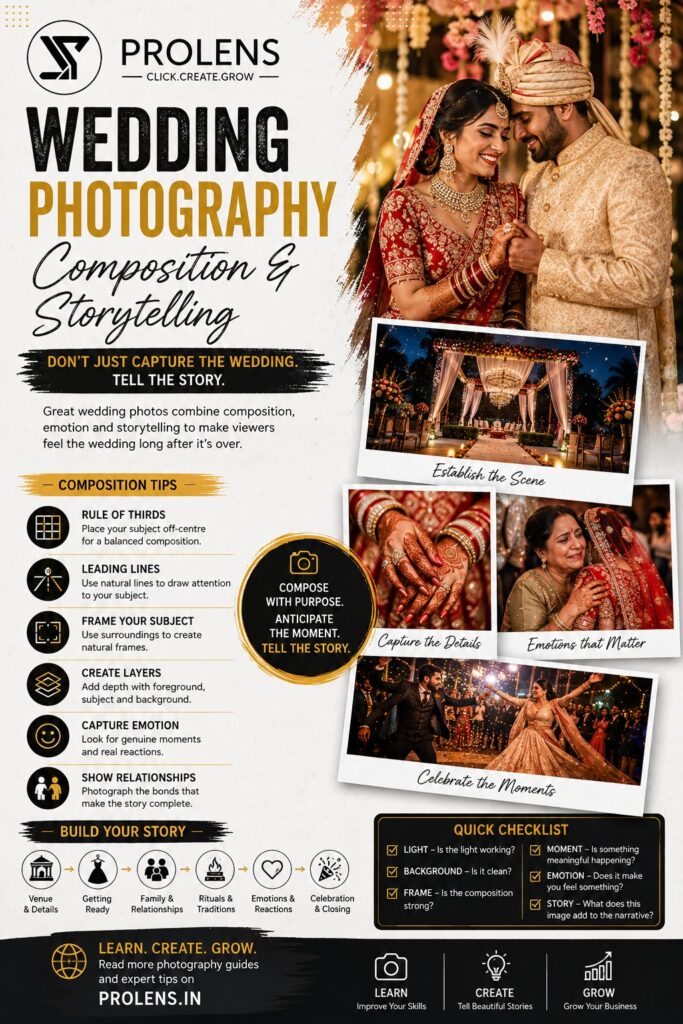
For Indian wedding filmmakers, cinematographers and content creators, camera movement has become an increasingly important part of visual storytelling.
From following a bride during her entry to capturing the energy of a Baraat or producing vertical reels for social media, today’s filmmaker needs equipment that is portable, quick to operate and capable of producing consistently smooth footage.
The ZHIYUN WEEBILL 3S is designed around exactly this kind of workflow.
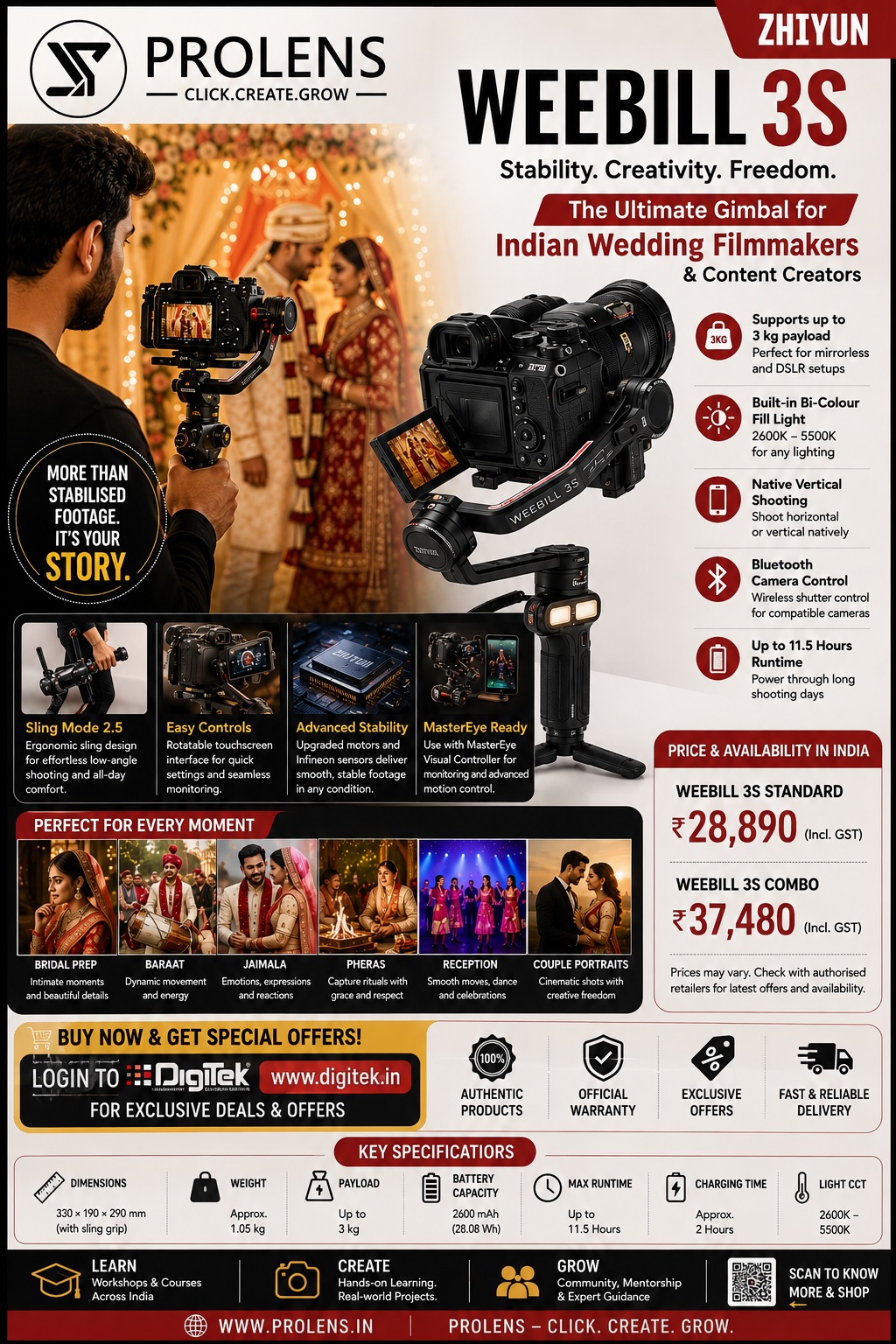
Building on ZHIYUN’s established WEEBILL family, the WEEBILL 3S combines three-axis stabilisation with an ergonomic sling-style design, integrated fill light and support for horizontal and vertical shooting. ZHIYUN rates the gimbal for camera setups weighing up to 3 kg.
Designed for Today’s Mirrorless Camera Setups
Indian wedding and event filmmakers increasingly work with compact full-frame and APS-C mirrorless systems.
The WEEBILL 3S is designed for mainstream mirrorless cameras and lighter DSLR configurations, with ZHIYUN specifying a maximum carrying weight of 3,000 g. Camera-and-lens compatibility still needs to be checked for the exact combination being used.
This makes it particularly relevant for photographers who have moved into hybrid photo/video production and want one relatively compact stabilisation system for wedding films, pre-wedding shoots, corporate videos and digital content.
Sling Mode 2.5: Built for Long Shooting Days
One of the characteristic features of the WEEBILL family has been its sling-style handling.
The WEEBILL 3S develops this further with Sling Mode 2.5, designed to make switching between conventional and low-angle shooting more comfortable. The system can incorporate an extendable sling grip and wrist rest, particularly with the Combo configuration.
This has practical significance in India.
A wedding filmmaker may work continuously through a bridal entry, Jaimala, Pheras, reception and dance floor. Equipment ergonomics therefore matter almost as much as headline specifications.
A more comfortable shooting position can be particularly useful when tracking subjects for extended periods or filming from lower angles.
Built-In Fill Light
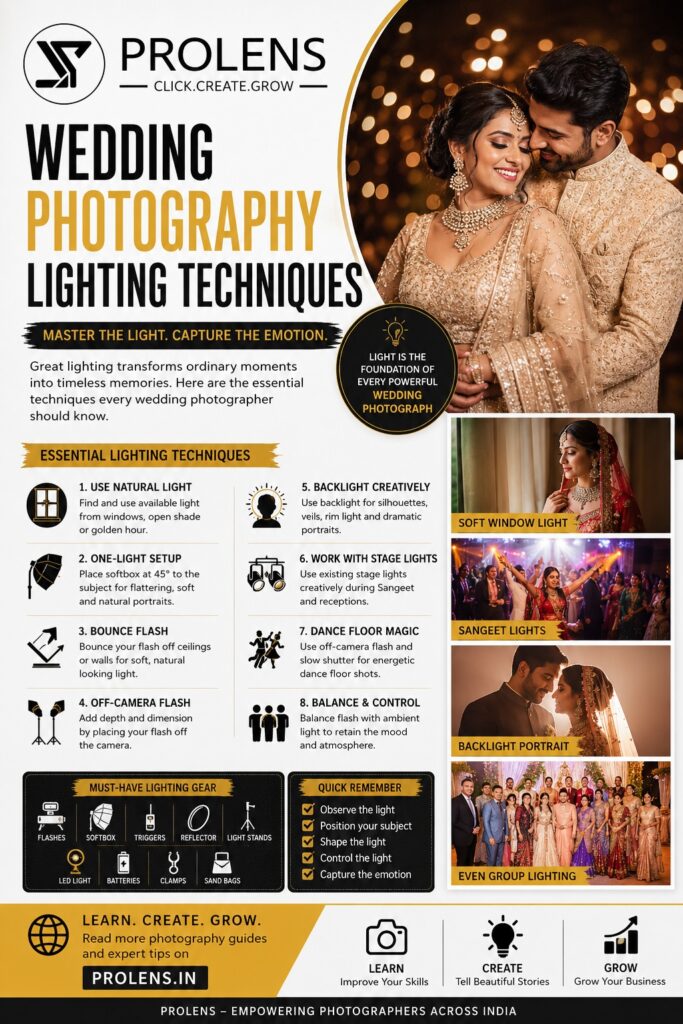
An especially useful addition is the integrated bi-colour fill light.
ZHIYUN specifies a colour-temperature range of approximately 2600K–5500K, allowing the light to be adjusted between warmer and cooler output.
It isn’t intended to replace a professional lighting setup, but it can be valuable when filming:
- Bridal preparation
- Jewellery and wedding details
- Couple close-ups
- Behind-the-scenes footage
- Dark reception venues
- Quick interviews
- Social-media content
For run-and-gun wedding filmmaking, having a small light integrated into the stabiliser can reduce the amount of additional equipment required for certain shots.
Horizontal to Vertical Shooting
This is one of the most relevant improvements for the Indian creator market.
Wedding filmmakers no longer deliver only traditional 16:9 wedding films.
Couples increasingly expect content suitable for Instagram Reels, YouTube Shorts and other vertical-video platforms.
The WEEBILL 3S supports native horizontal and vertical shooting, allowing creators to adapt the camera orientation for different deliverables. ZHIYUN specifically identifies native vertical shooting as one of the 3S’s upgrades over the earlier WEEBILL 3.
For wedding studios producing both cinematic films and rapid social-media content, that flexibility can be genuinely useful.
Wireless Camera Control
The WEEBILL 3S also introduces Bluetooth-based shutter control for compatible cameras, reducing dependence on additional control cables for supported functions.
This can simplify the physical setup and make moving between configurations faster—important when working in environments where the filmmaker may have only seconds to prepare for the next shot.
Up to 11.5 Hours of Runtime
Indian weddings frequently involve exceptionally long working days.
ZHIYUN specifies a maximum runtime of approximately 11.5 hours for the WEEBILL 3S under its test conditions, with around two hours quoted for charging.
Real-world battery performance will naturally depend on camera weight, balancing, motor load, lighting use, operating conditions and other factors, so professional filmmakers should still plan charging and backup power appropriately.
Where Does It Fit Into an Indian Wedding?
This is where the WEEBILL 3S becomes particularly interesting.
Imagine one wedding day.
Bridal Preparation
Use controlled, slow movements around the bride, jewellery and makeup.
Bride & Groom Entry
Walk alongside or ahead of the subject to create smooth tracking sequences.
Baraat
Use wider lenses and dynamic camera movement to communicate the scale and energy of the procession.
Jaimala
Create controlled push-ins and lateral movements while retaining the couple’s expressions.
Pheras
Use subtle movement rather than excessive camera motion. The purpose here should be to support the emotion and rituals.
Couple Portrait Session
Combine foreground objects, parallax and slow tracking movements for cinematic sequences.
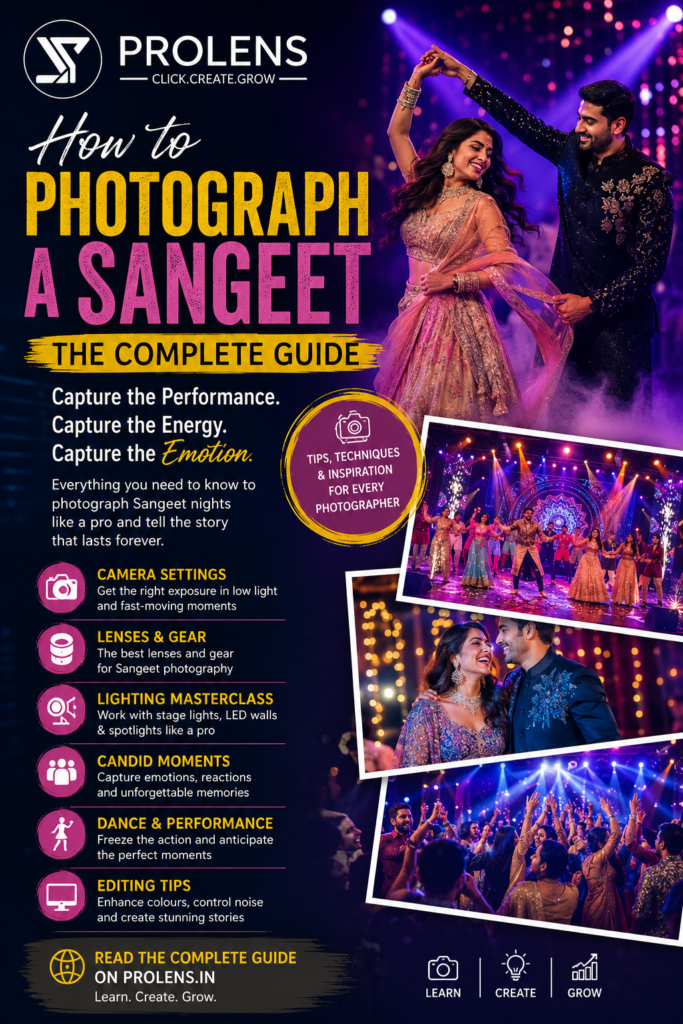
Reception & Sangeet
Use the stabiliser for entrances, dance performances and moving crowd shots.
Instagram Reels
Switch to vertical orientation to capture dedicated short-form content rather than simply cropping horizontal footage later.
That makes a modern gimbal more than a stabilisation device—it becomes part of the filmmaker’s visual vocabulary.
WEEBILL 3S vs WEEBILL 2
The WEEBILL 2 in the original article remains a capable gimbal and is actually still listed in ZHIYUN’s current WEEBILL range. Its standout feature remains the 2.88-inch flip-out colour touchscreen, along with a 3 kg-class payload and up to nine hours of battery runtime.
The WEEBILL 3S, however, makes more sense as the focus of a new Prolens article because it adds features particularly relevant to contemporary creators: native vertical shooting, Sling Mode 2.5, Bluetooth control and built-in fill lighting, while being considerably lighter at roughly 1.05 kg.
For filmmakers who specifically value the WEEBILL 2’s large flip-out monitor, however, the older model still has a distinctive advantage.
Price & Availability in India
As of this check, an Indian specialist photography retailer lists the:
WEEBILL 3S Standard — approximately ₹28,890
WEEBILL 3S Combo — approximately ₹37,480
with GST included.
Because prices, offers and stock can change, I recommend that Prolens doesn’t hard-code the price into the article headline or introductory paragraph. Put it in a clearly dated “Price & Availability” section instead.
ZHIYUN official WEEBILL 3S product page
Key Specifications
| Specification | ZHIYUN WEEBILL 3S |
| Stabilisation | 3-axis |
| Maximum payload | Up to 3 kg |
| Gimbal weight | Approx. 1.05 kg |
| Fill light | Built-in bi-colour |
| Colour temperature | 2600K–5500K |
| Vertical shooting | Yes |
| Sling system | Sling Mode 2.5 |
| Wireless control | Bluetooth shutter control on compatible cameras |
| Maximum runtime | Up to 11.5 hours |
| Charging time | Approx. 2 hours |
Specifications are based on ZHIYUN’s current product information and can vary by operating conditions and camera compatibility.
Is the WEEBILL 3S Relevant for Indian Creators?
For wedding filmmakers, independent cinematographers, photographers moving into video, YouTube creators and small production teams, the WEEBILL 3S offers an interesting balance between portability and professional functionality.
Its biggest advantages aren’t necessarily individual specifications.
They are the combination of:
compact size + 3 kg payload + sling operation + vertical shooting + integrated lighting + long runtime.
For Indian wedding filmmakers in particular, those features address genuine real-world requirements: long shooting hours, rapid changes between ceremonies, crowded venues and the growing requirement to produce both traditional wedding films and social-first vertical content.
Prolens Perspective
A gimbal doesn’t automatically create cinematic footage.
The filmmaker still needs to understand composition, subject movement, lens selection, pacing and visual storytelling.
Use stabilisation deliberately. Sometimes the strongest wedding shot is an elaborate tracking movement; sometimes it is a completely static frame capturing an emotional expression.
Technology stabilises the camera. The filmmaker tells the story.
PROLENS — Click. Create. Grow.