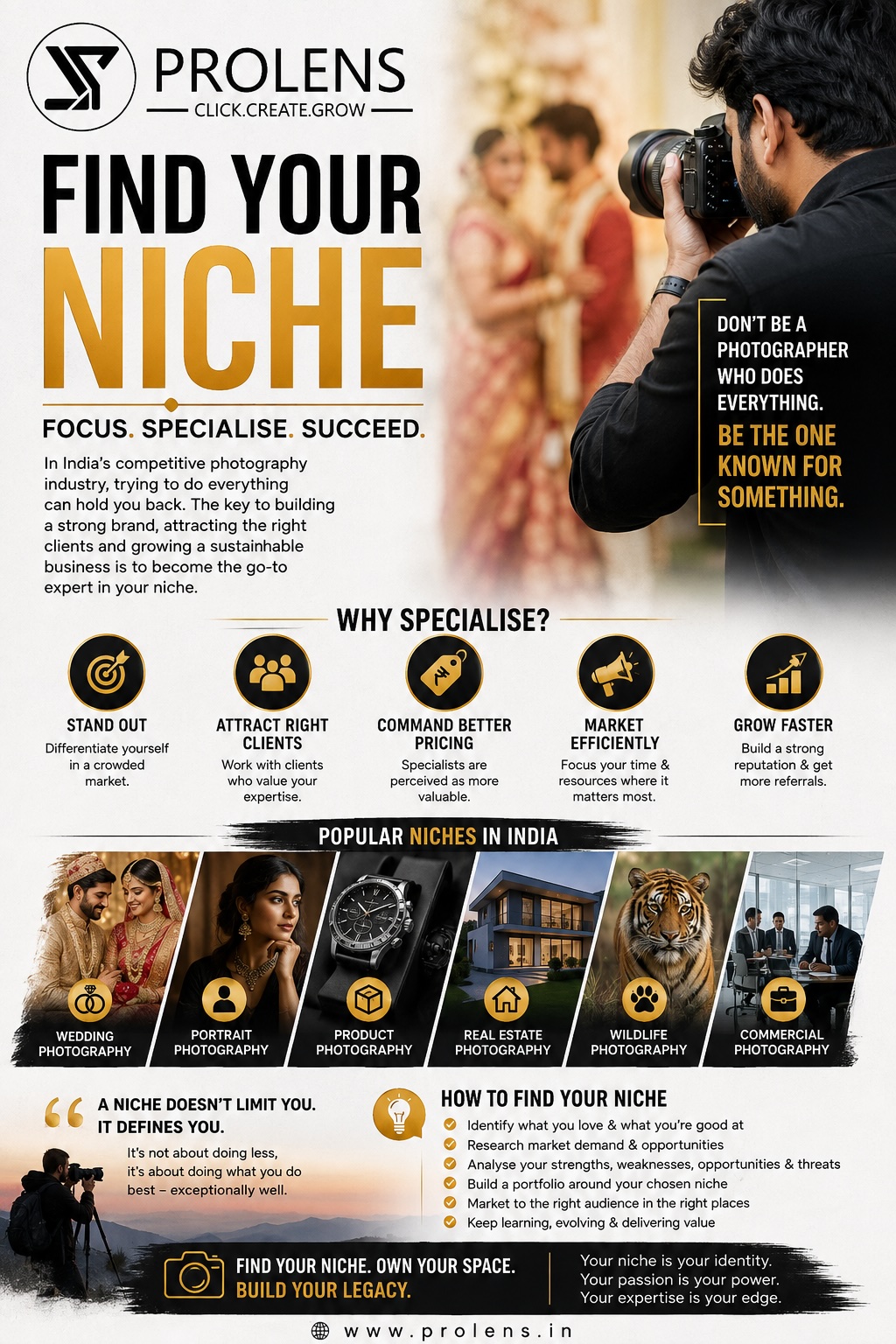
In India’s rapidly growing photography industry, trying to be everything to everyone may not always be the best business strategy. Instead, identifying a specific area of expertise and becoming known for it can help photographers build stronger brands, attract better clients and create a more sustainable business.
Are You Trying to Photograph Everything?
If you are a professional photographer—or planning to become one—you have probably heard that certain genres of photography offer quick opportunities to make money.
Over the years, we have seen different trends dominate the Indian photography market:
- Wedding photography
- Candid photography
- Pre-wedding shoots
- Maternity photography
- Baby photography
- Drone photography
- Fashion photography
- Product photography
- Real-estate photography
- Corporate photography
- Influencer content
- Social-media content creation
Whenever one category becomes popular, hundreds of photographers naturally move towards it.
The result?
More photographers competing for the same clients, increasing price pressure and making it harder to stand out.
The answer isn’t necessarily to offer more services.
Sometimes, the smarter strategy is to become exceptionally good at one specific thing.
The Power of Specialisation
A client rarely wants to hire simply “a photographer.”
They are usually looking for someone who understands their specific requirement.
A couple planning a luxury wedding may want a photographer experienced in high-end weddings.
A real-estate developer may want an architectural photographer who understands interiors and property marketing.
A jewellery brand may want someone who knows how to photograph diamonds, gold and intricate craftsmanship.
A corporate company may need a photographer who understands executive portraits, conferences and brand communication.
The more clearly you define what you do, the easier it becomes for potential clients to understand why they should choose you.
Don’t Chase Every Photography Trend
The Indian photography market is constantly evolving.
One year, everyone may be talking about cinematic wedding films.
Another year, it could be drone photography.
Then comes AI-generated content, influencer photography, short-form video or a new social-media trend.
There is nothing wrong with learning new skills.
In fact, photographers should continue to evolve.
But there is a difference between adapting to the market and building your entire business around every new trend.
A trend may create opportunities today but disappear tomorrow.
A strong specialisation, however, can become the foundation of a long-term business.
The Wedding Photography Example
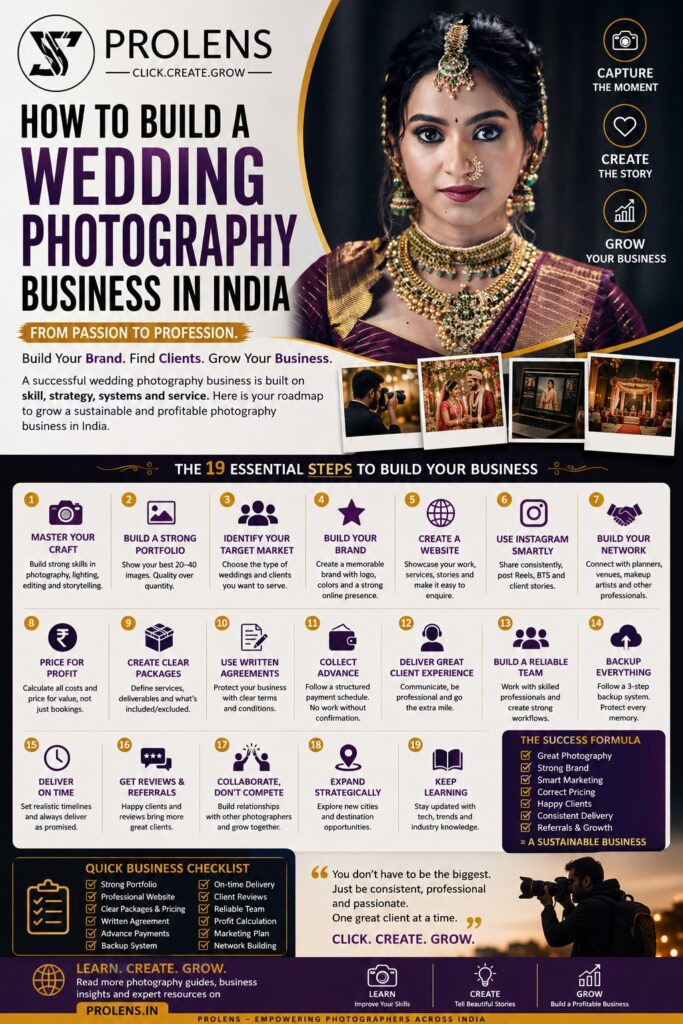
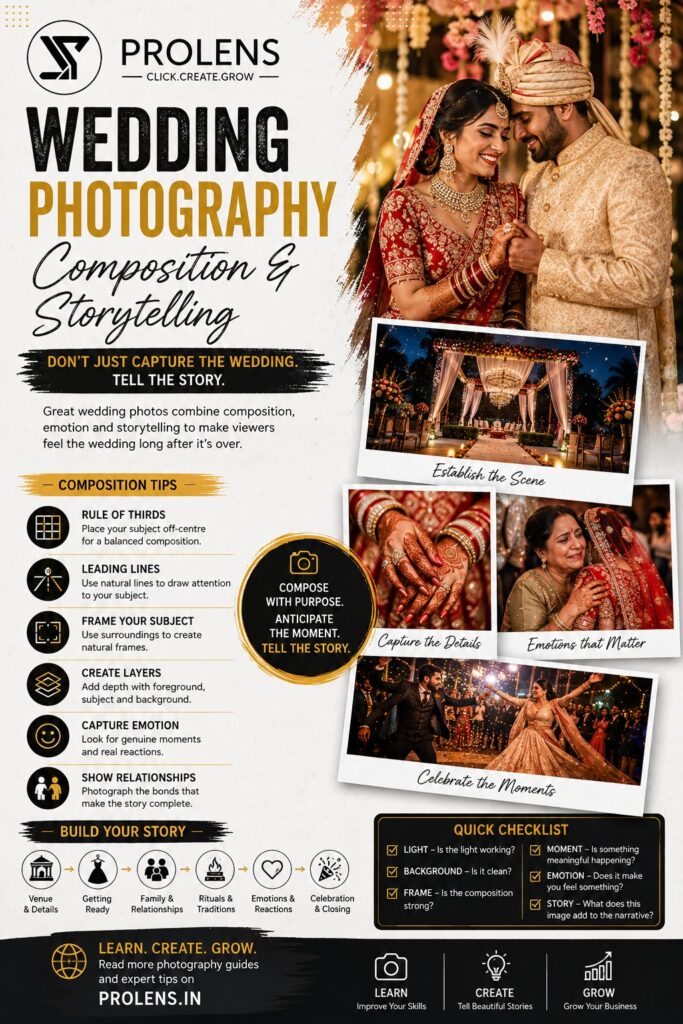
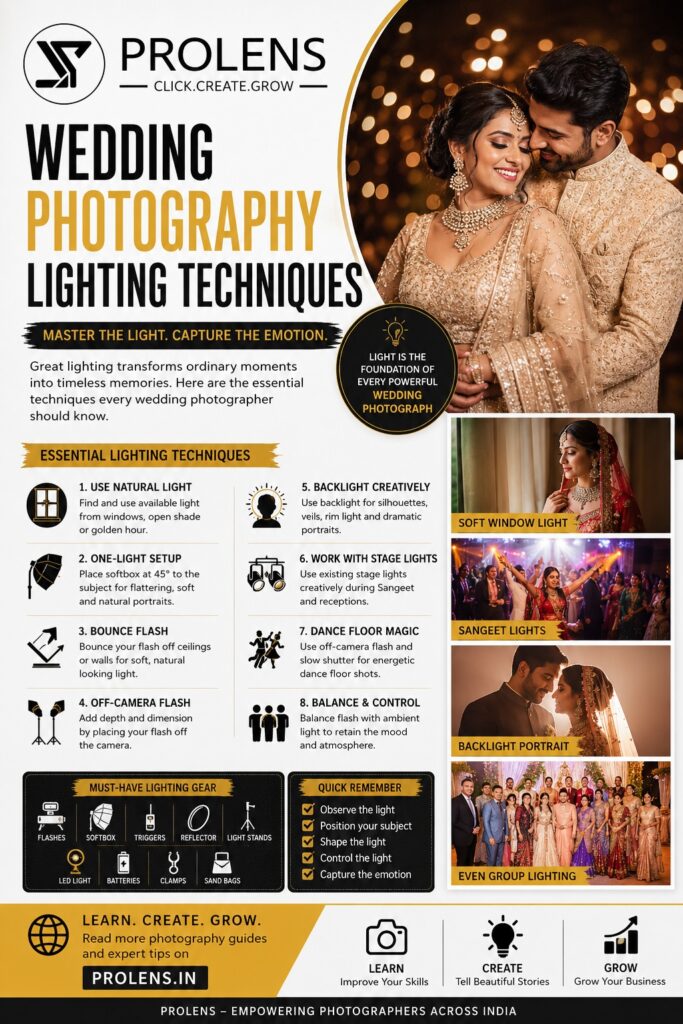
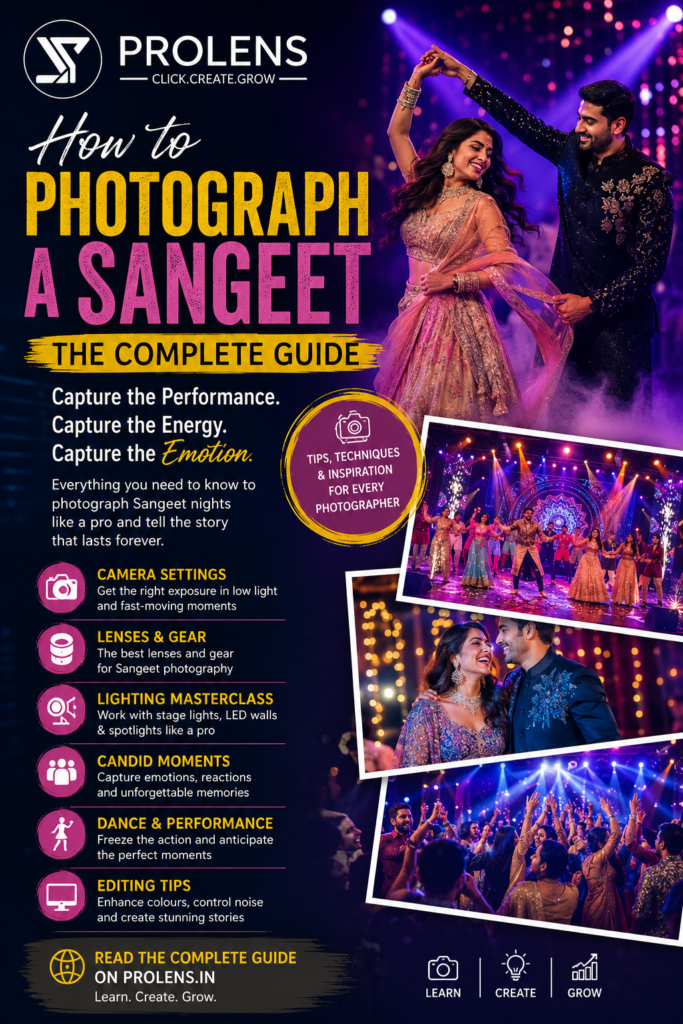
Wedding photography is one of India’s largest professional photography markets.
But “wedding photographer” itself is becoming a broad category.
Within it, there are opportunities to specialise further:
- Luxury weddings
- Destination weddings
- South Indian weddings
- North Indian weddings
- Traditional wedding photography
- Documentary wedding photography
- Editorial wedding photography
- Candid wedding photography
- Wedding fashion portraits
- Wedding cinematography
- Intimate weddings
- NRI weddings
- Temple weddings
- Multi-day celebrations
Imagine being recognised specifically as:
“The photographer for luxury South Indian weddings.”
That is much more powerful from a branding perspective than simply saying:
“We do all types of photography.”
Your Niche Can Be Based on More Than Genre
Specialisation doesn’t always have to mean choosing a photography genre.
You can build your niche around a client, location, style or problem you solve.
By Client
For example:
- Jewellery brands
- Architects
- Hotels
- Restaurants
- Real-estate developers
- Startups
- Corporates
- Fashion designers
- Wedding planners
- Educational institutions
By Geography
You could become known as the specialist photographer for:
- Bengaluru startups
- Mumbai fashion brands
- Jaipur destination weddings
- Kerala tourism
- Goa hospitality
- Hyderabad weddings
- Chennai industrial companies
By Style
You could develop a recognisable visual identity around:
- Cinematic portraits
- Documentary photography
- Editorial photography
- Minimalist product photography
- Fine-art wedding photography
- Environmental portraits
The objective is to create a clear association between your name and a particular type of work.
Don’t Confuse Specialisation With Limitation
One concern photographers often have is:
“If I specialise, won’t I lose other business?”
Not necessarily.
Specialisation does not mean that you can never photograph anything else.
You can continue accepting other assignments.
The difference is that your brand positioning should communicate what you are best known for.
For example, a photographer may primarily market themselves as a wedding specialist while still accepting portrait, fashion or commercial assignments.
Your niche is about positioning, not putting yourself inside a box.
What Are You Naturally Good At?
Before choosing a niche because you believe it will be profitable, look at your own strengths.
Ask yourself:
- What type of photography do I genuinely enjoy?
- Which assignments give me energy?
- What type of clients do I enjoy working with?
- What do people compliment me on?
- What kind of photographs come naturally to me?
- What skills have I developed over the years?
- What do I understand better than my competitors?
If you enjoy interacting with people, directing subjects and handling unpredictable situations, wedding, portrait or event photography could suit you.
If you prefer controlled environments and precision, product or architectural photography may be more appropriate.
If you love the outdoors and patience comes naturally to you, wildlife or travel photography may be a better fit.
Your strengths should influence your niche—not just market hype.
Use SWOT to Find Your Direction
A useful framework is SWOT analysis:
Strengths
What are you already good at?
Weaknesses
Where do you need more training or experience?
Opportunities
Where is there a genuine market demand?
Threats
Who are your competitors, and what challenges could affect your business?
For example, a photographer may discover:
Strength: Strong people skills and wedding experience
Weakness: Limited branding knowledge
Opportunity: Growing demand for luxury destination weddings
Threat: Large number of low-cost wedding photographers
The conclusion could be to develop a premium destination-wedding positioning rather than competing purely on price.
Look for a “Market in the Gap”
Finding a gap in the market isn’t enough.
You need to determine whether there is actually a market in that gap.
Suppose you notice that very few photographers are offering a particular specialised service.
That doesn’t automatically mean it is a great opportunity.
Ask:
Why aren’t many photographers offering it?
Perhaps:
- There is little demand.
- Clients don’t understand the service.
- The pricing doesn’t work.
- The market is too small.
- The required equipment is expensive.
- The service is difficult to scale.
Research is therefore essential.
Speak to potential clients.
Look at competitors.
Study pricing.
Understand buying behaviour.
Then decide whether the opportunity is commercially viable.
Build a Portfolio Around Your Niche
Once you identify your direction, your portfolio should reinforce it.
If you want to become a luxury wedding photographer, your portfolio shouldn’t contain 100 unrelated images.
Instead, showcase:
- Strong bridal portraits
- Groom portraits
- Family emotions
- Ceremony moments
- Details
- Decor
- Couple portraits
- Reception
- Creative compositions
Every photograph should communicate the kind of experience a potential client can expect from you.
Quality Over Quantity
A portfolio of 20 outstanding photographs can be more powerful than a portfolio containing 200 average images.
Your best work should immediately communicate:
This photographer understands what I need.
Your Website Should Tell the Same Story
Your website, Instagram page, brochures and presentations should all reinforce the same positioning.
For example:
Instead of:
“We offer photography and videography for all occasions.”
Consider:
“Luxury Wedding Photography & Cinematography across India.”
Or:
“Commercial Photography for India’s Hospitality & Real-Estate Brands.”
The second approach tells potential clients exactly where you specialise.
Specialisation Can Help You Command Better Pricing
Price competition is one of the biggest challenges facing Indian photographers.
There will almost always be someone willing to offer the same service for less.
Trying to win every client by lowering your price is rarely a sustainable strategy.
Specialisation gives you another option:
Compete on expertise and value rather than price alone.
When clients believe you are specifically suited to their requirement, they are more likely to evaluate your work based on:
- Experience
- Quality
- Reliability
- Creative approach
- Reputation
- Service
- Results
rather than simply asking:
“What is your package price?”
Stop Marketing to Everyone
One of the major benefits of having a niche is that your marketing becomes much more focused.
Instead of trying to advertise everywhere, identify where your ideal clients actually spend time.
For example:
Wedding Photographer
Focus on:
- Wedding planners
- Venues
- Bridal designers
- Makeup artists
- Wedding exhibitions
- Referrals
Commercial Photographer
Focus on:
- Agencies
- Brand managers
- Marketing departments
- Advertising agencies
- Business networks
Real-Estate Photographer
Focus on:
- Developers
- Architects
- Interior designers
- Property marketing agencies
- Hospitality businesses
You don’t need to be everywhere.
You need to be visible in the right places.
Build Relationships, Not Just Followers
Photography businesses are often built through relationships.
In India, referrals remain particularly important.
A strong relationship with a:
- Wedding planner
- Event manager
- Advertising agency
- Interior designer
- Jewellery brand
- Hotel
- Makeup artist
- Corporate marketing team
can generate significantly more business than a random social-media follower.
Your niche makes these relationships easier because people know exactly what to refer you for.
What Happens When You Specialise?
When you build a clear niche, several things can happen:
- You attract more relevant clients.
- Your portfolio becomes stronger.
- Your brand becomes easier to remember.
- Referrals become more specific.
- Your marketing becomes more efficient.
- Your expertise becomes more visible.
- You can potentially command better pricing.
- You spend less time chasing unsuitable enquiries.
- Your business becomes easier to scale.
Most importantly:
You stop trying to compete with everyone.
Your Niche Can Evolve
Choosing a niche doesn’t mean committing to it for the rest of your career.
Photography is a creative profession.
Your interests will change.
Technology will change.
The market will change.
Your clients will change.
Your niche can evolve accordingly.
A wedding photographer might eventually move into luxury hospitality.
A fashion photographer might move into advertising.
A commercial photographer might develop a fine-art practice.
A photojournalist might transition into documentary filmmaking.
The important thing is to maintain clarity in your current positioning.
Don’t Copy Someone Else’s Business
Another photographer’s success formula may not work for you.
Perhaps a successful photographer is charging premium prices for destination weddings.
That doesn’t automatically mean you should enter destination weddings.
Perhaps another photographer is making money from reels.
That doesn’t mean content creation is your ideal business.
Study successful photographers, but don’t simply copy them.
Ask:
What can I do differently?
Your unique combination of:
Experience + Personality + Skill + Location + Network + Visual Style
can become your competitive advantage.
Build Your Own Signature
The strongest photographers eventually develop something recognisable.
It might be:
- A lighting style
- A colour palette
- A way of directing people
- A storytelling approach
- A particular composition
- A signature editing style
- A unique client experience
When people can recognise your work without seeing your name, you have started building a visual brand.
Keep Learning
Specialisation doesn’t mean stopping your education.
Quite the opposite.
Once you know your direction, you can invest your time and money more intelligently.
Attend workshops.
Learn new technology.
Understand AI tools.
Study business.
Improve marketing.
Learn colour management.
Understand lighting.
Study storytelling.
Network with industry professionals.
And, most importantly:
Keep photographing.
The Prolens Perspective
India has one of the world’s most diverse and rapidly evolving photography markets.
From weddings in Rajasthan and Kerala to commercial assignments in Mumbai and Bengaluru, wildlife in Karnataka, fashion in Delhi and Chennai, and the growing demand for visual content from Indian brands, the opportunities are enormous.
But opportunity alone doesn’t guarantee success.
The photographers who build sustainable businesses are often those who understand where they fit into the market and why a client should choose them.
You don’t necessarily need to become the photographer who does everything.
You need to become the photographer people remember when they need something specific.
Find Your Niche. Build Your Expertise. Own Your Market.
The photography industry will continue to produce new trends.
Some will last.
Some won’t.
Don’t build your entire career around the latest buzzword.
Instead, identify what you are genuinely good at, understand where there is real demand, develop your expertise and communicate your value clearly.
Find your niche.
Build your reputation.
Create your signature.
And become the photographer your ideal clients actively seek out.
Prolens
Click. Create. Grow.
Empowering photographers across India through learning, industry exposure and professional growth.